|
We not only risk natural and man-made
disasters, we risk financial, commercial, political and social downfall.
Things can go wrong slowly - or things can go wrong quickly. A fast collapse would be uglier than most people
can imagine. A loss of trade,
labor, transport, food, banking, electricity or manufacturing would your cause life
to quickly
diminish to desperate subsistence. Scared people rarely think rationally and
unprepared people who cling to fantasies may soon die.
Part 2:
Survive a Collapse
You may forgive yourself for being
naive; but CONSEQUENCES do not forgive anybody!
|
It's not what you don't know
that will hurt you. It's what you know that isn't true.
This is a difficult article to write - and you may find it
difficult to read.
It opens a Pandora's Box of possibilities
... and solutions.
|
Egypt's Old Kingdom collapsed after a centuries of increasing prosperity. About 80% of all towns and villages were suddenly
deserted. Ancient records refer to people like locusts and parents
eating children. The collapse was sudden, cataclysmic and widespread. Most
civilizations end abruptly.
Would you blame the timer for the explosion of a bomb?
Do you consider your way of life to be a birthright?
Do you believe that natural resources allow perpetual prosperity? Would you reduce your standard of living to a sustainable lifestyle? You may be forced to
make this change! A collapse will be sudden, rapid and deep ... like a flash
flood ... and hurt developed countries the most. Yet your survival will have little to do with luck. See
also
Recession Coaching.
|
In 1977 New York City suffered a
power failure for one night. Over 3,000 arrests were made for
looting, 400 policemen were injured, 500 fires were started, more than
25,000 emergency calls were placed and four times the usual number of
hospital emergency cases were admitted ... in one night. |
In a local or regional disaster,
supplies quickly disappear.
Supermarkets will be closed and shops stripped bare in a few hours.
A collapse will be dangerous, ugly and scary. Your primary challenge
is to stay alive.
- Decide to live! Choose to survive!
- Be prepared - most people won't be!
- Get yourself healthy and understand the risks
- Learn what to do before, during and after a disaster
- Read, read, read ... and think! Perhaps start with
Global
Research
- Your best insurance? Learn survival skills, stockpile
essentials and have crisis plans
|
Professor Sir John Beddington, (UK government chief
scientific adviser), says that the world faces a perfect storm of
climate change impacting food, energy and water. |
Will you see your next birthday?
The size and growth of our human population profoundly impacts
on all life on Earth, yet is not publicly debated. We stand on the edge of collapse, yet
little information about the difficulties of survival can be found.
Survival training is nearly non-existent. Government agencies tasked to prepare
for disaster have been exposed as ineffective. In a collapse -
assume that you will be on your own.
|
It is too late to avoid serious impact from climate change
and ecological damage after trying to drive global economic growth far beyond
system and resource capacity. ... We risk an environmental crash, triggering a
sudden collapse in the global economy, and we need to be ready to respond to the
ensuing social and economic hurricane.
Paul Gilding, author of
The Great Disruption |
No civilization has ever prepared for collapse ... and
all civilizations except one have collapsed! Responsible preparation could include
social training
programs, preventing further environmental and ecological damage,
destroying nuclear weapons and
preparing industry for rapid, extended shutdown. The best scenario would be a
managed collapse. And the best pig would learn to fly.
At best, life in the coming years will become
increasingly smaller scale and local. This can happen if available cheap
energy decreases smoothly, if people act intelligently and if
global competition for food, water and oil does not trigger massive wars. What are the chances?
At best, large enterprises and cities will shrink
as the supply of cheap power (also cheap food, cheap medicine, cheap
transport, cheap communication, cheap education and cheap
politicians) dwindles.
At best, cheap power slowly disappears, taking industry
with it. City homes lose value. People who invested in suburban mansions lose
their illusions of equity. The disruption of urban infrastructure and communications
create logistical nightmares for people who cannot leave the cities.
At best, social upheaval will gradually increase.
Expect migrations away from cities and low-lying coastal areas, especially
after floods, droughts, power outages or epidemics. Expect reduced food
production and enormously inflated prices. Expect a surge of interest in
self-sufficiency, bartering and family farms. Expect a return to conservative
rural values where fortified farms are real wealth - again.
End of Democracy
Like modern industry, cities and education - modern democracy is a
product of cheap energy. In a collapse, expect millions of unemployed
office, technical and government workers - highly credentialed in suddenly-useless
specialties. Expect an economic collapse to create a new peasantry - office
workers becoming unskilled laborers or bandits; tied to food production by
desperation and hunger.
Without modern sanitation and medical care, expect plagues
and epidemics. Without modern education, expect many professions to vanish. Without modern democracy, expect wars.
And consider, "Who
benefits?" Religions
and cults may experience enormous growth as oil-based societies return to more
medieval structures, perhaps calling the collapse an Act of God.
|
Myths work as long as a majority believe them to be true. Leaders clad their
agendas in the language and thought patterns of those myths. Until the
20th century, leaders used religious talk ... now people believe that
democracy and the free market really exist and that they are the
mainstay for everything dear and valuable ... Thus to mobilize today's
populations, leaders use democracy and free-market talk. It is like the
difference between official socialist/communist concepts and real-world
socialism/communism.
Marcel Marien (Berlin 2010) |
Chaos Theory
Our societies require the ongoing integrated functioning of
many elements, e.g. electricity, water, food, heat, transportation,
communication, medicine and security. An extended failure of one sub-system can collapse our societies; and disruption in one country
or region can create chaos elsewhere.
A gradual collapse would not be SO bad. A fast collapse
would be chaotic. Most people will panic, freeze or not believe
the news until starvation and epidemics are rampant. Many people who wait
for help may die unpleasantly. NOW is the right time to make emergency last-minute
preparations as insurance. How can you keep your essential possessions? How can
you protect your family?
| Natural Disasters |
Man Made Crises |
Social Collapse |
- Floods
- Blizzards
- Hurricanes
- Earthquake
- Drought or Famine
- Epidemic or Plague
|
- War
- Civil Unrest
- Power Outages
- Nuclear Incident
- Terrorist Attacks
- Chemical Release
|
- Financial Collapse
- Commercial Collapse
- Political Collapse
- Societal Collapse
- Military Collapse
- Civilization Collapse
|
The essential
difference between survivors and casualties is preparation!
During a disaster - every second counts!
Waiting for help may kill you!
Potential Stages of Societal Collapse (Thanks to
Dmitry Orlov)
Stage 1: Moral Collapse. You stop trusting people.
You hear many empty promises, even by politicians, doctors, teachers and
your neighbors. You feel alienated and abandoned by your government, and you
expect people to try to abuse you. Unhealthy relationships, depression,
anxiety and mental health problems are normal. Freedom
is another word for bondage.
Stage 2: Financial Collapse. You stop
trusting currency and banks. You realize that
the paper in your wallet and the digits in bank computers are only fantasies,
based on faith and magic.
You cannot assess risk and your assets are not guaranteed. When financial
institutions become insolvent; your savings evaporate, and you cannot access
capital or get a loan. Authorities call it a temporary emergency and
blame liberals, anarchists
or terrorists.
Stage 3: Commercial Collapse. You stop
trusting businesses. Money is either devalued and scarce or
hyperinflation makes it worthless. People
hoard and trade basic commodities. Import and retail chains cease, and there
are widespread shortages of necessities. Supermarkets have armed guards
and you hear of food riots. Martial law may be declared and essential supplies
are taken by troops.
Stage 4: Political Collapse. You stop trusting
governments. Attempts to provide survival necessities are
ineffective; and politicians lose legitimacy and relevance. Emergency calls
are not answered. Strict rationing and forced labor begins. Starving people
seek food, medical supplies and weapons. Airlines, borders and some cities are
closed. You hear of migrations of starving people spreading pandemics.
Stage 5: Social Collapse. You stop trusting authorities.
Social institutions are resourceless. Many violent prisoners have escaped.
Dead bodies are commonplace. Cities are centers of starvation and disease.
Families allow the old and weak to die. Might is right ... but who has weapons?
Internment camps
conceal slavery, starvation and genocide ... for a while.
Stage 6: Military Collapse. You stop trusting the
military. Martial law transitions into local dictatorships. Para-military
forces
perceive you and your family as targets competing for the same resources as
themselves - or as potential slaves. They create systems of forced labor
and slavery ... fighting local wars to control local resources. Kindness becomes a
strange concept.
Stage 7: Civilization Collapse. You stop
trusting hope. Death is everywhere. People cannot afford to be
kind. Many urban regions have become death zones. Nothing is more dangerous than
desperate men. Whose children will live - and whose will die?
You hear stories of starvation ... you might be killed for a candy bar
... you might be butchered for your meat.
|
CANNIBALISM IN AMERICA
Government Report following the winter of 1609-1610
Driven thru insufferable hunger to eat those things which nature most
abhorred, the flesh and excrements of man as well of our own nation as of an
Indian, digged by some out of his grave after he had lain buried three days
and wholly devoured him; others, envying the better state of body of any
whom hunger has not yet so much wasted as their own, lay wait and threatened
to kill and eat them; one among them slew his wife as she slept in his
bosom, cut her in pieces, salted her and fed upon her till he had
devoured all parts saving her head. |
Are these shadows of things that will be, or
are they shadows of things that may be?
Charles Dickens, A Christmas Carol
Martyn Carruthers was a paramedic and later
Radiation Protection Officer and Emergency Measures Organization (EMO) Officer
for the Canadian government before founding Systemic Solutions.
Part 2: Survive a Collapse
. Online Coaching
for Survival
Plagiarism is theft. Copyright ©
Martyn Carruthers 2003-2012 All rights reserved.
.... Delete remainder of page when
page 2 is available ...
|
NEWSFLASH
All major utilities – electricity, water, communications, gasoline –
are now under central control and key personnel cannot leave their
workplaces. Military barricades circle administrative buildings. Remaining
TV and radio programs are replaced by government news reports. |
You have a short time. Are you (even slightly) prepared?
The last straw hardly matters - government bankruptcy, global
warming, oil wars or space aliens. Misinformation dominates the media and
instructions and advice given to avoid widespread panic often worsen any chance
of survival. This is not be a good time to be patient, stay indoors
and listen to a radio. This is a last chance to get out of a city
fast while you still can.
In a collapsing economy, virtual money is ... virtual!
Government agencies tell you, while communications last,
that their instructions will ensure your survival. But your survival may not support their survival. Police in most countries (including
America) are not obligated to protect you even now. Many unprepared people will die during a fast economic collapse.
People who are prepared, tough and intelligent ... well, some will survive.
During moral collapse, family values deteriorate and
communities disintegrate. The only crime is getting caught. Parents allow media
to damage their children's mental health. More parents reject
their children, more teachers fear their students and more doctors fear their
patients. Identity loss, drug
use and sexual abuse became normal - all hidden in plain sight.
During financial collapse your paper assets and perhaps even banknotes
are exposed as worthless. You keep records of your stocks and bonds, certificates of
deposit, insurance, taxes and pensions in case of a recovery.
However, you are prepared for hyperinflation with stocks of money-substitutes
for trading ... coffee, sugar, salt, tools, herbs,
pain-killers, etc. Hoarding is not yet a crime.
Food and supplies will immediately disappear
in a commercial collapse.
During commercial collapse most consumer goods
become unavailable, except in trade for useful items or services. Shops and
supermarket staff hoard their goods awaiting some sign of recovery - only
distributing goods in return for trade or protection, or at gunpoint.
Communications cease and food riots begin. Police, military or
firemen do not protect you or your home. You cannot get essential medications.
Suspected looters or terrorists may be shot on sight ... which means
anybody.
Martial law is imposed by military forces when civil authority
breaks down. Curfews, rationing, closed borders and travel
permits at first ... later you hear of sealed cities, slave labor and
concentration camps. Armed forces suppress
domestic violence - or increase it. See:
Guidelines for Troops
in a Domestic Disturbance
and Steps
to Disperse Insurgents and Restore Order.
During political collapse government services vanish.
Your contracts, pensions and tax returns have little meaning or relevance.
Police and military use their weapons to protect their own property from
hordes of hungry people. Suicides skyrocket. Highways resemble parking
lots. Starving city people converge on farms near cities. Strict
rules and road barricades attempt to contain riots and epidemics, and summary
executions start for minor offences - such as hoarding or even walking.
During social collapse most hospitals, clinics and
schools cease to function. Their unpaid staff are forced to work or they become
local enterprises trading their services for food and essentials. Disease is
everywhere. Electrical equipment is operated from local
generators - while fuel is available. Few people care whether you live or
die ... and many would prefer to loot your dead body.
During military collapse the military becomes a new aristocracy based
on scavenging and feudal farming. Much of your food and property is confiscated
and little if any effort is invested in your survival. Executions and murder are
commonplace. Nuclear weapons are used to sterilize some starving, disease
centers once called cities. Unless you are in a safe community you are on your own.
Unless you have needed skills you are an easily-replaced field slave
or grunt soldier.
During civilization collapse most of your time is spent
gathering and protecting whatever you can hoard, trade or scavenge; without
being robbed, enslaved ... or eaten. Pity ... what a concept!
But that is not the end of the human story. Some people will survive.
After a period of anarchy, signs of social recovery include:
- Medieval power struggles last for years
- Barter economies until hard currencies emerge
- Cults and religions attract vast numbers of converts
- Industrial plant and scientific equipment are recycled for reuse
- Organized crime and / or law enforcement and / or military
are governing bodies
Survival Coaching - Preparation
A probably-fatal mistake is to assume that you can gain essential knowledge and
survival skills during the chaos of a
regional crash or global collapse - without internet or books and with intense competition.
Maybe take time to decide now ...
- What is essential to your survival?
- What would simplify or comfort your survival?
- If you cannot survive without luxuries - how do you want to die?
Repair family ties. Build strong relationships so that you
can support each other. Encourage financial responsibility and personal
responsibility. Help people break obsessions and addictions. Encourage young
adults to select spouses who are compatible and willing to make lasting
commitments.
Preparation is a better investment than stocks, bonds or
gold. Stockpiling basic necessities is cheap insurance, but be discrete,
or you may be accused of hoarding, or be robbed. Plan to survive. Have
what you need instead of desperately searching or fighting for it.
Other good insurance if you can afford it may be a large sailboat
or a small country house with space to grow and store crops. Seek a rather isolated
location, over a hundred miles from a major city, not visible from the road, with
woodland and surface water nearby.
(And if there is no collapse in your lifetime, you will have a nice boat /
vacation house / smallholding investment with a good resale value which can
be used by your children.
Buy essentials now. Essentials are what you cannot live without.
Extreme basics include food, water, clothing, shelter, heat and medicines.
(Given the shelf life of medicines, get some books about herbs!)
| Food (per Person per Year) |
Medical |
|
Wheat, rice or cereals 300 lbs / 140 kg
Powdered milk (nonfat) 75 lbs / 30 kg
Sugar or honey 60 lbs / 25 kg
Beans & legumes 60 lbs / 25 kg
Cooking oil 20 lbs / 9 liters
Salt 5 lbs / 2 kg |
First Aid Manuals and medical books
Assorted bandages and band aids
Scissors, thermometer, safety pins
Painkillers, cough syrups and antiseptics
Medical prescriptions and vitamins
Supplements, creams and ointments |
|
Food Production |
Other Essentials |
|
Hunting & fishing supplies
Land, seeds & cuttings
Tools & containers
Winter storage
Transport |
Dry, warm shelter
Clean water & soaps
Cooking & eating utensils
Clothes ... blankets etc
Binoculars / telescope |
Luck Favors the Prepared
Agrarian ways may seem relics of the past. Your ancestors stored fruits,
vegetables and canned meat in cellars. They survived severe winters
without electricity. You may not like it - but you can too.
- Get healthy. Have and use a bicycle. Build family connections.
- Read about survival. Use but don't depend on
the internet - or on electricity.
- Sort out your fears and concerns now ... you will need a healthy
mind to protect your family through bad times. Life will be tough enough
without depression, neuroses and panic attacks.
- Dry foods such as rice, grain and beans are cheap insurance against
a crisis. Stock enough long term storage food for a family of four persons
to survive for three months, or for one person for a year. Use this food
regularly and restock it regularly.
- Keep a supply of clean water ... if you lose electric
power you may lose drinking water too.
- Wean yourself off addictive and unhealthy foods. Learn
about and explore wild foods. Know which local wild plants are edible
and which are toxic.
- Stock needed medications and emergency medical supplies;
learn first aid and CPR.
- Ten acres of good land can support 4-10 people indefinitely, depending
upon available water, land quality, tools, foiling thieves and management skills.
- If you can, purchase a large sailboat - or a holiday home in a low
population density area - the lower the better - more than 160 km / 100
miles from any large town or city.
- Survival is the best revenge.
Drug dealers do not benefit from healthy customers.
Most physical and mental diseases are consequences of unhealthy lifestyles
and unhappy relationships. We can help you sort it out!
Survival - Coaching Communities
Following a collapse, many unprepared people will die and survivors
must cooperate to live. In remote areas and in rural villages, neighbors are
still valued. We can help people create community - to resolve most internal
and external conflicts - by dissolving
enmeshments,
limiting beliefs and
trauma.
We help people assimilate any shadows from the past and be all of who they are.
Do you want to be stranded amongst angry and hungry strangers? Whilst there
is still Internet, we can coach people to dissolve emotional blocks and work
together, and develop a dynamic sense of survival. We can coach communities
to develop leaders and build Community Visions. We can help potential
leaders solve problems and resolve conflicts while encouraging members to
cooperate.
Most people, even with huge emotional baggage, even in horrendous crisis, can
participate in community - unless they
prefer loneliness. Community requires people who prefer co-operation to individualism.
It is possible. We can coach people to build community and develop leaders.
In the event of a collapse, joining a successful rural community will become a
dream for most starving people. How will your community decide who to accept -
and who to turn away? How kind can you be? How will you deal with armed
intruders? How will you commence trade with other survivor communities? You
may find our community and emergency training useful.
Survival Intelligence ... Study Survival Books
Read, read, read ... and talk to people who have training
and experience in the risks associated with your region. Is your home at
risk of floods, hurricanes, blizzards or earthquake? What can you do if
your savings become worthless, if your supermarkets are empty or if armed
gangs loot your area?
Most survival books are tips on what to do if you get lost in
the woods, or if the weather is unusually bad. Get some books on
self-sufficiency, first aid, small farms, trapping, raising livestock,
basic construction and repair, and using and making hand tools. Your personal
and family survival will be a great victory in a starving land that is being
looted, ransacked and ravaged. Don't rely on the Internet!
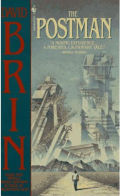 |
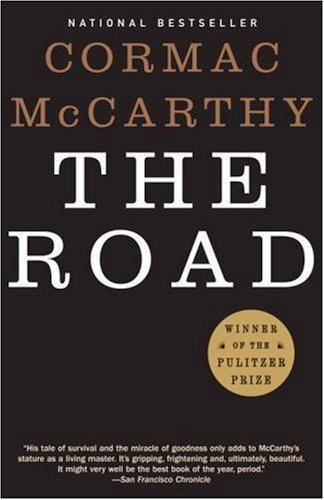
You may better consider the effects of social collapse if
you read novels or watch post-apocalyptic movies about economic disasters and societal collapse
... The Postman by David Brin, for example, The Road,
by Cormac McCarthy or Lucifer's Hammer by Larry Niven.
|
 |
Nuclear War Survival Skills, by Cresson H. Kearny
(ultimate self-help book on civil defense.)
The Long Emergency, by James Howard Kunstler (Atlantic Monthly
Press, New York, 2005).
Kunstler writes that as energy becomes scarce, transportation will become
difficult, causing food and other commodities to become unavailable. Local
communities must become self-sufficient for food production, but some,
particularly large cities, will be unable to do so, leading to mass starvation,
disease and civil unrest. Kunstler suggests that governments cannot
manage these problems.
Sense of Survival, by J. Allan South (Timpanogos Publishers, 1990).
Comprehensive, including fallout studies and protection.
How to grow a garden, find drinkable water, and raise animals. This is
useful knowledge if the infrastructure collapses.
Life After Doomsday, by Bruce D. Clayton, PhD
(Paladin Press, 1980).
Thoughtful and intelligent. General insights and specific survival
strategies following economic collapse,
civil unrest and natural disasters. Excellent fallout studies.
No Such Thing As Doomsday, by Phillip L. Hoag
(Yellowstone Publishing, 1996)
Useful information.
|