|
Although our
online coaching
is inspired by Hawaiian ho'oponopono and ho'omanamana,
factual information about traditional ho'oponopono and genuine ho'omanamana
is difficult to find. Most of what is
falsely taught as Hawaiian huna and ho'oponopono has been ridiculously
over-simplified and distorted a very long way
from its true Hawaiian origins. Martyn Kahekili Carruthers
The Hawaiian kahuna healers recognized illness caused by external
relationships (mawaho) and diseases caused by internal imbalances
(maloko). Mawaho illnesses required
ho'oponopono with the living and the
dead, while maloko disease required herbal remedies (la�au
lapa�au). Many required both.
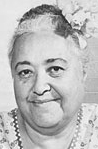 |
He kanaka Hawaiʻi ʻo Mary Abigail
Kawenaʻulaokalaniahiʻiakaikapoliopelekawahineʻaihonua Wiggin Pukui
(1895-1986). Ua ike ʻia ʻo ia ʻo Kawena. He meaʻimi naʻauao,
haku mele, a me mea
hula ʻo ia. Ua hānau ʻia ʻo ia ma Kaʻū,
Hawaiʻi. ʻO Mary Paʻahana Kanakaʻole (he Hawaiʻi) lāua ʻo
Henry Wiggin (he kanaka mai Makakukeka) nā
inoa o kona mau mākua.
Mary Kawena Pukui
|
Much of the following information is from ʻO Nana I Ke Kumu,
pp 60-70, by Mary Kawena Pukui, E.W. Haertig, M.D, and
Catherine Lee, published by the Queen Lili'uokalani Children's
Center in 1971.
Some Hawaiian words often used in ho'oponopono are:
| Aloha - love, greeting |
Hihia - entanglement |
Kumu - teacher |
'Ohana - extended family |
| Aumakua - family god |
Ho'ohiki - promise |
Mahiki - to peel off |
Pilikia - trouble, problem |
| Haku - leader |
Kahuna - specialist |
Mihi - apologize |
Pule - pray, prayer |
| Hala - fault, error, sin |
Kala - wash, forgive |
Noho - spirit possession |
Wehe wehe - to untie |
Ho'oponopono & Related Concepts (Mary Pukui)
ho'oponopono � setting to right; to make right;
to correct; to restore and maintain good relationships among family, and
family-and-supernatural powers. A family conference in which
relationships were set right through prayer, discussion, confession,
repentance, mutual restitution and forgiveness.
Derivation
- ho'o, to make, cause or
bring about
- pono, correct, right, in
perfect order; (plus many other closely related meanings)
- ponopono, in order, cared
for, attended to, what is socially approved and desirable
... Mrs. Stold this incident of 15 years ago:
"My hanai [adoptive] Mom called from the Big Island and said she
had a dream that bothered her. She said she had a problem, so better I come
home already. "I said, 'Why don't we talk about it now, over the phone? Maybe I
can help you.' "But Mom said, 'No, better you come home. We need ho'oponopono.�
So early next day, I flew home for ho'oponopono." What is this ho'oponopono? Why
is it important enough to cause plane trips between islands?
As Mary Kawena Pukui describes it:
Ho'oponopono is getting the family together to find out what is wrong. Maybe
to find out why someone is sick, or the cause of a family quarrel. Then, with
discussion and repentance and restitution and forgiveness� and always with
prayer� to set right what was wrong.
"to set right"
with each other and God
Ho'oponopono is to set things right with each other and with the Almighty. I
took part in ho'oponopono myself for 47 years, from semi-Christian to Christian
times. And whether my 'ohana [family] prayed to aumakua [ancestor gods] or to
God, the whole idea of ho'oponopono was the same. Everyone of us searched his
heart for hard feelings against one another. Before God and with His help, we
forgave and were forgiven, thrashing out every grudge, peeve or resentment among
us.
who took part: a family matter
Ho'oponopono was essentially a family matter, involving all the nuclear or
immediate family, or only those most concerned with the problem. Some leeway was
possible. A non-relative living with the family might take part if he was
involved with the pilikia (trouble). Children could be excused. And if an
involved family member was absent, ho'oponopono might be held as a "second best"
alternative to full family participation.' Though the entire extended family
could hold ho'oponopono, this was usually impractical. Mrs. Pukui points out
that with too many present, the whole person-to-person interchange of
confession-discussion-forgiveness became impossible. Thus ho'oponopono was not a
community-wide therapy. Only the title in its broadest meaning, and parts of
ho'oponopono, such as prayer and periods of silence, apply to a large gathering.
"The ideal," says Mrs. Pukui, "is to keep
it in the family and have all immediate family taking part."
kahuna or family senior could lead
Either a helping-healing kahuna (not a kahuna ana'ana or sorcerer) or a
family kupuna (senior) could conduct ho'oponopono. In the closely knit
community life of early Hawaii, the kahuna usually had a kind of "family
doctor" knowledge of a family. This would allow him to lead ho'oponopono
with real insight into the problems.
From Mrs. Pukui's memories and personal experience, and the
shared views and experiences of Hawaiian staff members and associates, we have
outlined an "ideal" or "standard" ho'oponopono. Basic
procedures and therapeutic dynamics are the same, whether the ho'oponopono
also included traditional pre-Christian rituals or modern additions.
Essentials of Ho'oponopono
This ho'oponopono has certain specific requirements. Some
concern procedure; others attitudes.
Always included in complete ho'oponopono are:
- Opening pule (prayer) and prayers any time they
seem necessary.
- A statement of the obvious problem to be
solved or prevented from growing worse. This is sometimes called kukulu
kamahana in its secondary meaning.
- The "setting to rights" of each successive
problem that becomes apparent during the course of ho'oponopono, even though
this might make a series of ho'oponopono necessary (mahiki).
- Self-scrutiny and discussion of individual
conduct, attitudes and emotions.
- A quality of absolute truthfulness and sincerity.
Hawaii called this 'oia'i'o, the "very spirit of truth."
- Control of disruptive emotions by
channeling discussion through the leader.
- Questioning of involved participants by
the leader.
- Honest confession to the gods (or God) and
to each other of wrong-doing, grievances, grudges and resentments.
- Immediate restitution or arrangements to
make restitution as soon as possible.
Mutual forgiveness and releasing from the guilts, grudges,
and tensions occasioned by the wrong-doing (hala). This
repenting-forgiving-releasing is embodied in the twin terms, mihi and kala.
Closing prayer
Nearly always, the leader called for the periods of silence called ho'omalu.
Ho'omalu was invoked to calm tempers, encourage self-inquiry into actions,
motives and feelings, or simply for rest during an all-day ho'oponopono. And
once a dispute was settled, the leader decreed ho'omalu for the whole subject,
both immediately and long after ho'oponopono ended.
pre-Christian closing rites
In pre-Christian times, ho'oponopono was followed by pani rituals.
These were usually chicken or pig offerings to the gods. Sometimes pani included
the ceremonial ocean bath, kapu kai. Then followed the 'aha 'aina (feast).
Today, post-ho'oponopono rites are virtually unknown. A meal or snack
usually follows ho'oponopono.
attitudes needed in ho'oponopono
To bring about a true "righting of wrongs," certain attitudes were required.
Some concerned the very decision to hold ho'oponopono. For this decision rested
on the basic relief that problems could be resolved definitely if they were
approached properly. They must be approached with a true intention to correct
wrongs. Confession of error must be full and honest. Nothing could be withheld.
Prayers, contrition and the forgiving-freeing of kala must come from the heart.
Without these, ho'oponopono was form without substance.
Ho'oponopono for Children
Mrs. Pukui has written a hypothetical ho'oponopono to illustrate basic
procedures. In this first quoted excerpt, she combines the opening prayer with
statement of the problem.
"I have called you, Pukana, you, Heana,
and you, Kahana [all children] to come here and look into this problem with me.
Your brother, Kipi, is losing the sight of one eye ... we want to save the other
eye, so that is why we called you together. We will all pray together, and then
we'll discuss things."
"Oh, God, Creator of heaven and earth ... we ask
Your help. To our aumakua* from the East and from the West, from the North
and from the South, from zenith to
horizon, from the upper strata and the lower strata, hearken. Come. We want to
discuss together and get your guidance and help, so we can know what is wrong
with this boy." Mrs. Pukui then questioned each child. What came to light first
was that Kahana was angry with Kipi over some mischievous prank he had played.
This brother-sister disharmony was settled promptly, before any
further questioning. Kipi admitted his misbehavior. Then followed the
conceptual ritual of kala. This, again geared to the young, went as follows:
Mrs. Pukui: "Kahana, are you willing to kala your
brother?" Kahana: "Yes." Mrs. Pukui: "Free him entirely of this
entanglement of your anger?" Kahana: "Yes." Mrs. Pukui: "Remember,
Kahana, as you loosen your brother from his trespasses, you loosen yourself, too. As you
forgive, you are forgiven. Now, who do you want to forgive you?" Kahana:
"Please, God forgive me." Mrs. Pukui: "Yes, we will ask that now. You gods, hear
now that Kahana is to free her brother of his trespasses, and to free him from
the crown of his head to the soles of his feet, to the four corners of his body.
May he be happy later. "And you, Kipi, are you willing to kala your sister for
being angry with you?" Kipi: "Yes, I am willing."
Nearly identical phrases of kala were addressed to Kipi.
(The significant use of "free" and loosen" rather than
"forget" is discussed under kala). Then Kipi was questioned more
intensively. The boy confessed to stealing some money. He also owned up to a
"Hawaiian offense". He had thrown stones at an 'elepaio, a bird form
of a family aumakua. For both, he expressed contrition and asked for forgiveness.
Then Mrs. Pukui again prayed.
"To You, O God, and Your sacred Son, and all aumakua
everywhere, hearken to this prayer. This boy is sorry for what he has done.
I am sorry he has done such things. So, please free him of his
trespasses."
Then followed arrangements for
restitution. Kipi was to work at small jobs and earn enough to return the money.
His sisters agreed to help him. And to make amends with offended aumakua, he
was to offer and burn a food sacrifice (mohai 'ai) of an egg and ti leaf. This
symbolized the traditional chicken and pig used in pani (closing) rites.
(*in pre-Christian ho'oponopono, aumakua were called by name - MKP)
This settled, Mrs. Pukui concluded:
"Now we dismiss our ho'oponopono and we pray that all this trouble be taken away
and laid away. "O, great eyeball of the sun, please take all this bundle of
wrong-doing. Take it out to the West with you. And, as you go down again, to
your rest, please take all the faults and trespasses that were committed. Lay
all of this in the depth of the sea, never more to come back."
Mrs. Pukui's account is an example of
ho'oponopono in a transition period from Hawaiian to Christian religion. God and
the 'aumakua are invoked impartially. It is rich in Hawaiian concepts: that
misconduct was punished by physical illness (the eye ailment); that the body was
visualized as having four corners; that the "great eyeball" of the sun held
mystic powers, and that mistakes and offenses could be taken away forever
in mystic ways. It also illustrates the basic Hawaiian precept that when
forgiveness is sincerely asked, it must be granted.
Because this ho'oponopono concerned
children, it did not include the emotional depth, self-scrutiny of motives,
guilt and aggressions, and the periods of silence (ho'omalu) of an adult
session. In fact, Mrs. Pukui says that, "In my grandmother's home, small
children always sat in on ho'oponopono even if they didn't take part. Many times
I was even bored, until I grew to understand better..."
ho'oponopono for Mrs. S
The adult subtleties of guilt and remorse were very much present in the
ho'oponopono mentioned in the beginning of this discussion. This is the one so
urgently requested by the hanai mother of Mrs. S. Mrs. S continues with her
account: "So I took my baby with me, and went home to Kona the next day.
All the family were there. My hanai cousin's Mom� a lady minister�was there
to lead ho'oponopono.
(From here on, the minister is referred to as "This Lady"
or "ho'ola" literally "healer," but more generally used to
mean a minister, often believed to have gifts of healing or prophecy.)
"My hanai Mom was in bed. They told me Mom had felt
very sick and had gone to the doctor. She was 69. And she felt that some of
her sickness was really physical. But some of it�well, maybe not. Then
she had this dream. And then she knew I should come home and all of us should
ho'oponopono.
"So we all got together in the living room. No,
not kneeling down. Just comfortable. Not a real circle, but so we
could see each other.
Wehe i ka Paipala
"First this Lady prayed, all in Hawaiian* ... asking God to show us His
word and how to find out what was wrong. How to help Mom get well. While
this Lady prayed, Mom opened the Bible for guidance.
[ *Everyone present understood Hawaiian.
Intelligibility throughout is a requirement of effective ho'oponopono. ]
"Then Mom told her dream. She dreamed that
I was alongside a high cliff and I was about to fall in the ocean. So Mom
yelled. But when she yelled out at me, I said, 'Oh, I'm going.' And the second
and the third time, she called me, and I said, 'I'm going. 'And Mom said she
thought this dream meant that because I was living in Honolulu I was ho'okano
[conceited] and I didn't take any interest in her or her welfare. I thought,
because of Mom's age and all, she just wanted attention. "But this Lady,
the ho'ola, she thought the dream and my Mom's sickness meant that Mom was
holding something back.* Something that she had not let me know.
old wrong & guilt emerge
"So This Lady prayed again. And we all kept quiet for a while ... trying to
help Mom. And then Mom told us more ... She said that before my grandmother died,
she gave her [Mom] a Hawaiian quilt. Mom was supposed to give it to me when
I grew up. It was really my quilt, meant for me.
"But my hanai Mom kept it. And when I grew
up and got married, she never gave me that quilt. Others, but not this one. What
happened was that Mom sold the quilt for $300. And she had been living with all
this 'ike hewa [guilt] all this time. This Lady said part of Mom's sickness
was because of this guilt. She told Mom she would never get well until she got
my forgiveness. And Mom cried. She really cried! She felt so guilty.
confession & forgiveness
"Then the ho'ola said Mom should confess to me and before God Jehovah.
She did. She asked me to forgive her, and I did. I wasn't angry ... And later
Mom's sickness left her. Of course, she still had diabetes, but the rest�being
so confused and miserable�all that left her."
Interviewer: "But what about your quilt?
Did she arrange restitution?" restitution was made Mrs. S: "Oh, yes.
During ho'oponopono she said she would quilt another one for me. The others
helped her. She got the quilt finished and gave it to me before she died."
Interviewer: "How did you end ho'oponopono?"
next problem is dealt with
Mrs. S: "We didn't end it right away. We had to work more on the dream. You
know, the dream where Mom saw me on the pali not paying any attention to her
calls. Well, This Lady, she interpreted this to mean that because my hanai Mom
had done this thing about the quilt and kept it a secret, this was really why I
would not answer. And why I ignore Mom in real life. But I said, 'No, I am not
ignoring Mom. It is just that I am married now and have a baby and I am busy.'
[ *Dreams are commonly prompted by something repressed,
comments the Center's psychiatrist. The ho'ola, also a relative, was able to
draw on long knowledge of family affairs. ]
But Mom said that I did neglect her. That I did not write
home, sometimes for a long time. And the ho'ola, told me, 'After this, you
should write often. Your mother is old, and she needs your letters.
She looks forward to hearing from you.' And Mom cried again. And I felt, oh, so
much love for her. "And we talked about, oh, lots of little misunderstandings.
And we forgave each other for so many things. The ho'oponopono brought us so
close together. It did. It really did! And we stayed close to each other
until the day Mom died.
closing prayer
"Then the Lady prayed again to Jehovah God, thanking Him for opening up the way
and giving us an answer. And she thanked Jehovah for bringing things out in the
clear. She prayed to Jehovah to close the doors, so no evil in the family or
from outside would harm us ... she asked the angels of Jehovah God to guard the
four posts of the house. Then she amen'd* all in Hawaiian.
[ *In pre-Christian Hawaii, prayers and chants were concluded
with phrases using 'amama, meaning "the prayer is free" or
"flown" or "finished." ]
"And after ho'oponopono, it was so peaceful-like, There
was love�oh, so much love!" Interviewer: "How long was this last
prayer?" Mrs. S: "About half an hour." Interviewer: "How long was the
ho'oponopono?" Mrs. S: "Oh, all day. One person took care of the phone so we
wouldn't be interrupted." Interviewer: "After it ended, what did you do?" Mrs.
S: "We were hungry. We ate. Just supper�not a special meal."
alcohol is not allowed
Interviewer: "I know that you, personally, do not drink. But could anyone else
have had a highball or a beer during the day?" Mrs. S: "Oh, No! Nobody ever
drinks in ho'oponopono. Because when people drink they let their feelings, their
temper run away from them. In our ho'oponopono, we cried a lot when we forgave
and made up, but we had to stay in control. I mean over really strong feelings
like anger."
Mrs. S 's account and Mrs. Pukui's earlier
example show some interesting similarities and differences. Both point out one
of the common traditional reasons for ho'oponopono, that of finding the cause
of a puzzling illness. Said Mrs. S , "A part of Mom's illness was physical...
but part of it, well maybe not." A century ago, kahunas often asked "Has
ho'oponopono been held?" before they would proceed with treatment. And on Niihau
today, families hold ho'oponopono first, then call Kauai for medical help if the
illness persists.
mahiki, layers beneath layers
Both examples demonstrate mahiki, the dealing with each successive "layer"
of trouble, one at a time. In the ho'oponopono for childhood transgression, these
layers were of easily recognized conduct and emotion. First, childish
misbehavior and the anger it caused, then the theft, then throwing stones at the
'elepaio bird�all were brought out in turn. In the adult ho'oponopono, the
layers were made also of emotion-underlying-emotion. Let's trace the structure
of this disturbed relationship.
To borrow medical terms, the "presenting complaints"
were a dream and an illness. At first, only the "top layer" of dream
significance was discussed. It, said the ho'ola, like the illness, meant
"Mom is holding something back." What was she holding back?
A hostile act, to sell the quilt.
This caused long-standing guilt. And this guilt was a factor causing Mom to
accompany and complicate organic disorders with functional or psychosomatic
illness.
How were these revealed layers "disposed of?"
For Mom, confession, discussion, restitution and expressed contrition. For
mother and daughter, mutual forgiving and releasing (mihi and kala). All in the
presence of God. But was mahiki complete? All layers stripped away?
Not yet, There was more to the dream. As the ho'ola
interpreted it, the mother's hostile action (in dream form, placing daughter
on the dangerous cliff) led to lack of communication between mother and
daughter (daughter-in-dream refused to answer mother's calls). As Mom saw
it, daughter ignored her from general selfishness and haughtiness exemplified
in the move to Honolulu.
And, on the conscious level were actual instances of daughter's
neglect and the mother's resentment of this neglect. These layers also must be
taken care of. And yet more "layers" were peeled off and dissolved in
discussion, in mihi and kala�and in tears and embraces. ("And
we talked about so many little misunderstandings. And we forgave each other for
so many things.") Or, as Mrs. Pukui describes the abstract in terms of the
tangible, "Think of peeling an onion. You peel off one layer and throw it aside,
so you can go on and peel off the next layer. That's mahiki."
ho'omalu and kukulu kumuhana
In Mrs. S 's experience, two more components of ho'oponopono seem to have come
into being spontaneously and simultaneously. "Then we all kept quiet awhile
... trying to help Mom," Mrs. S relates. We could rephrase it as: "We all kept
quiet awhile." Or, "We all had ho'omalu" (a period of silence for
thought and reflection). "... trying to help Mom." Or, "... and- we
joined in kukulu kumahana" (the pooling of emotional-spiritual forces for a
common purpose).* *Both ho'omalu and kukulu kamahana are discussed at end of
ho`oponopono listing. The ho'ola in this ho'oponopono did not need to
control temper outbursts. ("I wasn't angry," said Mrs. S .)
the leader intervenes
In a more recent ho'oponopono, the leader did intervene frequently. This
ho'oponopono concerned primarily "Dan," his hapa-haole* wife, "Relana,"
and Dan's mother. Mother and daughter-in-law had been increasingly hostile
ever since the young couple married. As time went on, in-laws on both sides were
drawn into the family hihia (entanglement of ill-feeling). Finally, after eight
years, Dan persuaded his wife and mother to join him in ho'oponopono. Dan's
great-aunt conducted it. As resentments and bitterness were brought out, open
accusations were made.
"You never made me welcome at your house," charged
mother-in-law. "You never came to visit. Just to interfere," said daughter-in-law.
"I wanted to show you how to cook right. But would you let me teach you anything?
Not you! Ho'okano!" As voices rose, Tutu ("Auntie") called
for ho'omalu, Then after a minute or two of silence, she insisted each one must
talk in turn, to her, not to each other. "She laid down the law several times,"
Dan reports, "but in the end the two got down to talking about why they were
angry, instead of just yelling at each other." What gradually emerged then was a
young, mainland-educated wife's attempts to be independent and to fashion her
household along "modern" lines, and a Hawaiian mother-in-law's clinging both
to her son and to Hawaiian traditions of close-knit family relationships and
living patterns.
"It was a long, long ho'oponopono. Relana and Mom
must have mihi'd and kala'd a dozen times. They never will see eye-to-eye.
But we do visit back and forth now and we all get along pretty well,"
states Dan. "Now we're trying to get all the others�all the in-laws�to
ho'oponopono to straighten out the rest of the hihia."
Intervention by the leader anytime it was needed was
traditional, says Mrs. Pukui. "The leader had authority. When he said
'Pau. Enough of this.' everybody got quiet. Sometimes the leader would
stop the talk because of hot tempers. Sometimes, if he thought someone was
not being honest, or holding things back, or making up excuses instead of facing
up to his own hala [fault]. Then the leader would ask the person, 'Heaha
kau i hana ai? What did you really do? Ho'o mao popo. Think about it.'
And there would be ho'omalu for a little while."
emotions kept under control
Obviously, a successful ho'oponopono was not mere emotional catharsis.
Hawaiians seemed to know that neither crying jag nor shouting match solves a
problem. In fact, the Center's psychiatric consultant believes the
emotional controls of ho'oponopono provide one of its great therapeutic
strengths. To quote: *half-Hawaiian; half-Caucasian.
"In ho'oponopono, one talked openly about
one's feelings, particularly one's angers and resentments. This is good. For
when you suppress and repress hostilities, pretend they do not exist, then
sooner or later they are going to burst out of containment, often in
destructive, damaging ways. Ho'oponopono used the 'safety valve' of discussion
as one step towards handling old quarrels or grudges, and even more importantly,
as prevention, so minor disputes would not grow into big grievances.
"But 'talking things out' is not enough.
Something constructive must be done about the cause of the grudge, the reasons
behind the quarrel. And to get this done, talking about anger must be kept under
control. Let the anger itself erupt anew, and more causes for more resentments
build up. 'Setting things to rights' requires all the maturity one can muster.
When run-away emotions take over, so do child-like attitudes and behavior.
The ho'oponopono provision that participants talk about anger to the leader,
rather than hurling maledictions at each other was a wise one.
"Only when people control their hostile
emotions, can satisfactory means of restitution be worked out. And usually, it's
pretty hard to forgive fully and freely until, for example, property has been
returned or damage repaired or one's good name has been cleared.
"Ho'oponopono seems to be a supreme effort at self-help
on a responsible, adult level. It also has the spiritual dimension so vital to
the Hawaiian people. And even here, prayers, to aumakua in the past or God in
the present, are responsible, adult prayers. The appeal is not the child-like,
'Rescue me! Get me out of this scrape.' Rather it is, 'Please
provide the spiritual strength we need to work out this problem. Help us to help
ourselves."'
Ho'oponopono defined in 1971
Unfortunately, very few Hawaiians practice this "supreme effort at self help"
in 1971. For when Christianity came in, more than a century ago, ho'oponopono went
out. Because ho'oponopono prayers and rituals were addressed to "pagan gods,"
the akua and aumakua, all ho'oponopono was labeled pagan. Many Hawaiians
came to believe their time honored method of family therapy was "a stupid,
heathen thing." Some practiced ho'oponopono secretly. As time went on, Hawaiians
remembered, not ho'oponopono but only bits and pieces of it. Or grafted-on
innovations. Or mutations. Or complete distortions of concept, procedure and
vocabulary.
True ho'oponopono: the sum of its parts
Many of these fragments, innovations, additions or departures are themselves
desirable. They are not ho'oponopono in its entirety. For Hawaii's family
therapy is the sum total of many parts: prayer, discussion, arbitration,
contrition, restitution, forgiveness and releasing, and the thorough looking
into layers of action and feeling called mahiki. It is this sum total of its
many beneficial parts that makes ho'oponopono a useful, effective method to
remedy and prevent family discord.
Dr. Haertig:
"Ho'oponopono may well be one of the soundest methods to restore and
maintain
good family relationships that any society has ever devised."
Online Ho'oponopono Coaching
I integrated ho'oponopono into what I my systemic
coaching, together with ho'omanamana
(making great power) and kala (cleansing or forgiveness).
This is a complete system of relationship coaching and emotional
healing that can help people reach into and transform all parts of
their lives.
I was trained in Hawaiian Shamanism by a number of Hawaiians
including Mona Kahele - a friend of Mary Pukui and cousin of
Margaret Machado. Aunty Mona worked as a social worker most of her life,
and was honored by the governor of Hawaii for her work with native Hawaiian
children. Mona taught ho'oponopono in South Kona, on Big Island Hawaii. Her
body died in 2006 and her ashes were scattered off the South Kona coast ...
I honor the love and wisdom of my Aunt Mona Kahele. Martyn Carruthers
Mahalo nui loa
(great gratitude) for your attention. A hui hou kakou! Until we meet again ...
Online Huna & Ho'oponopono .
Hale Ho'�la
|
Training in Hawaiian Spirituality & Mysticism |
|
Huna 1 |
Bringing Down the Sun: Ho'oponopono
& Ho'omanamana |
|
Huna 2 |
Elements of Nature: Honua, Ha, Ahi & Wai |
|
Huna 3 |
Dreamtime: Ho'omoe, Moe Uhane & Expanded Consciousness |
|
Huna 4 |
Advanced Huna of I'o, Kumulipo and
Awaiku |
|
Huna 5 |
Huna Experience in Croatia, Mexico or on
Hawaii |
Hawaiian Spirituality
. Huna,
Healing and Ohana .
Kumulipo
.
Soulwork
Will you join me under the trees
by Kealakekua Bay? Will you come with me into the craters in Hawaii
Volcano Park? Or will you invite me to come to you? I bring these teachings
to the world under their old name of Huna Kalani. Do you want to
bring back this ancient healing magic?
Can you join us in Hawaii? Our classrooms
are the beaches, forests and volcanoes. Can
you make Hawaii a journey of a lifetime? Come and visit the most
beautiful, most sacred (and most haunted) places on Big Island? Or do you prefer
online coaching?
Huna Kalani .
Soul Mentorship |